What are tools?

What are tools?

June 14, 2025

Gurjeet Singh

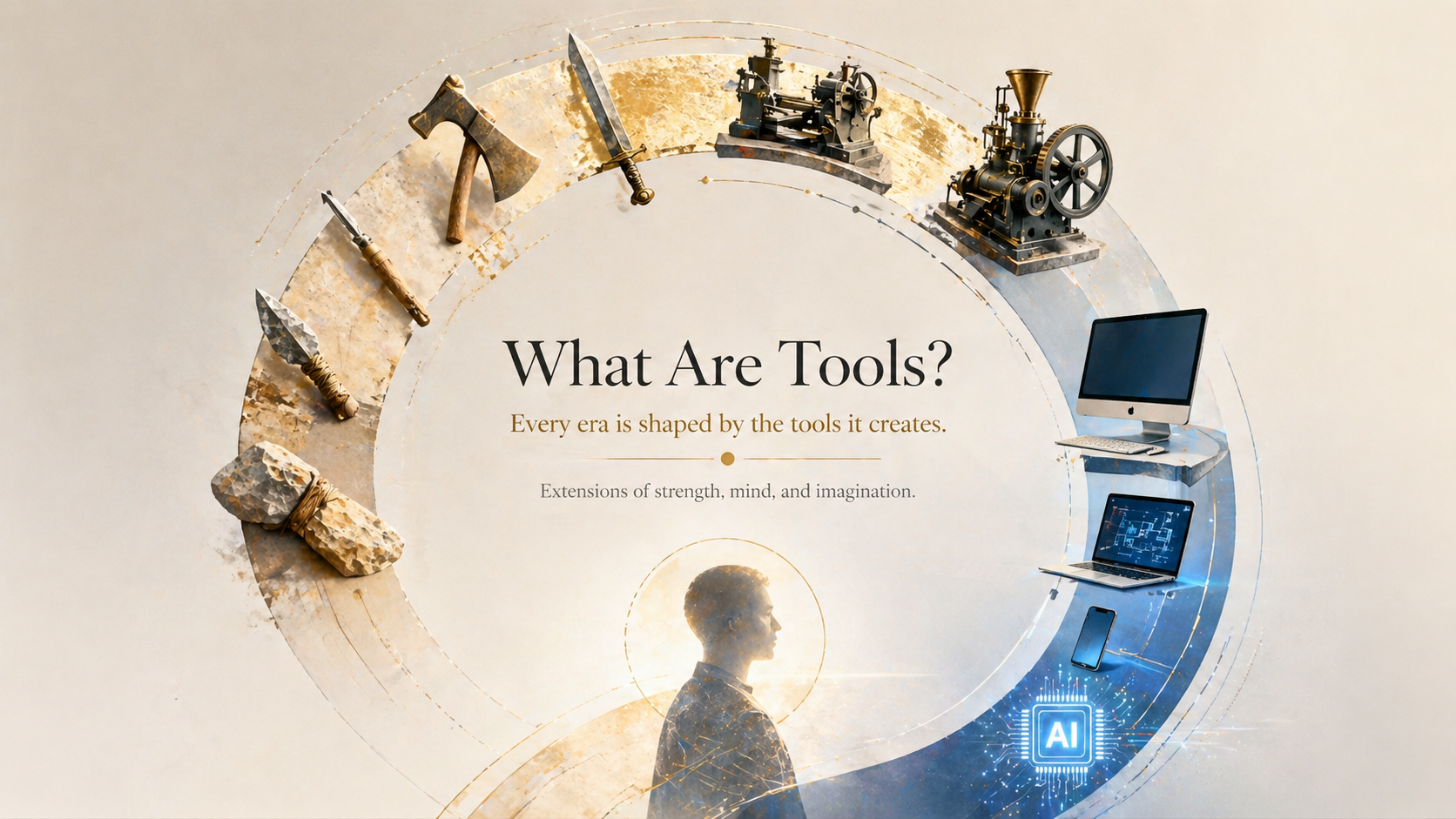
The unique ability of humans to craft and use tools has fundamentally changed the course of history, from primitive implements to the sophisticated digital technologies we use today.


What Makes Us Human


While other species use tools, humans are unique in our ability to:

  • - Innovate continuously — We don't just use tools, we improve them
  • - Teach across generations — Knowledge compounds over time
  • - Think abstractly — We can imagine tools that don't exist yet
  • - Collaborate at scale — Complex tools require collective intelligence

  • > "Man is a tool-using animal. Without tools he is nothing, with tools he is all." — Thomas Carlyle


    The Tool Evolution Journey


    **Stone Age → Bronze Age → Industrial Age → Digital Age → AI Age**


    Each era didn't just change what we could do—it changed who we could become.


    Era
    -----
    Tool Type
    -----------
    Human Capability Multiplier
    ----------------------------
    Era
    **Stone Age**
    Tool Type
    Physical tools
    Human Capability Multiplier
    2-3x strength & precision
    Era
    **Bronze Age**
    Tool Type
    Metal tools
    Human Capability Multiplier
    3-5x durability
    Era
    **Industrial Age**
    Tool Type
    Machines
    Human Capability Multiplier
    10-50x mass production
    Era
    **Digital Age**
    Tool Type
    Computers
    Human Capability Multiplier
    100-1000x information processing
    Era
    **AI Age**
    Tool Type
    Intelligent systems
    Human Capability Multiplier
    1000-10000x cognitive augmentation

    The Tool Mastery Curve


    **Novice → Intermediate → Expert → Master**


  • - 0-20 hours: Learning the basics
  • - 20-100 hours: Becoming competent
  • - 100-1000 hours: Achieving expertise
  • - 1000+ hours: Teaching and innovating

  • The journey from novice to master isn't just about time—it's about transformation.


    Modern Tool Categories


    **Physical Tools** (Extending our bodies):

    - 3D printers → Rapid prototyping

    - Electric vehicles → Sustainable mobility

    - Robotic surgery → Precision operations

    - CNC machines → Complex fabrication


    **Digital Tools** (Extending our minds):

    - Search engines → Instant knowledge access

    - AI assistants → Cognitive augmentation

    - Design tools → Creative amplification

    - Data visualization → Pattern recognition


    The Human-AI Partnership


    The future isn't humans vs. AI—it's humans + AI.


    **The Perfect Collaboration:**

  • Human Vision (30%) — Strategy and direction
  • 2. **AI Execution** (20%) — Rapid processing and iteration

    3. **Human Refinement** (40%) — Quality control and optimization

    4. **Human Touch** (10%) — Personalization and meaning


    This isn't replacement—it's amplification.


    Tools as Extensions of Self


    Every tool we create is essentially an extension of ourselves:


  • - Physical tools extend our strength and precision
  • - Mental tools extend our memory and processing power
  • - Social tools extend our communication and collaboration
  • - Creative tools extend our imagination and expression

  • The Next Evolution


    **What's coming next?**


  • - Neural interfaces — Direct brain-tool communication
  • - Augmented reality — Seamless digital-physical integration
  • - Predictive tools — Anticipating our needs before we know them
  • - Collaborative AI — Collective intelligence systems

  • The ultimate tool won't just extend our abilities—it will help us become more human.


    The future of human progress lies in our continued ability to create tools that enhance our capabilities while maintaining our essential humanity.
    More Posts

    Learning how to lead

    Learning how to lead

    April 26, 2026

    This started as curiosity. The same instinct that pulled me into building things eventually asked a harder question: what does it take to lead them? Courage, I have come to understand, is not the absence of fear. It is being scared and doing the thing anyway.

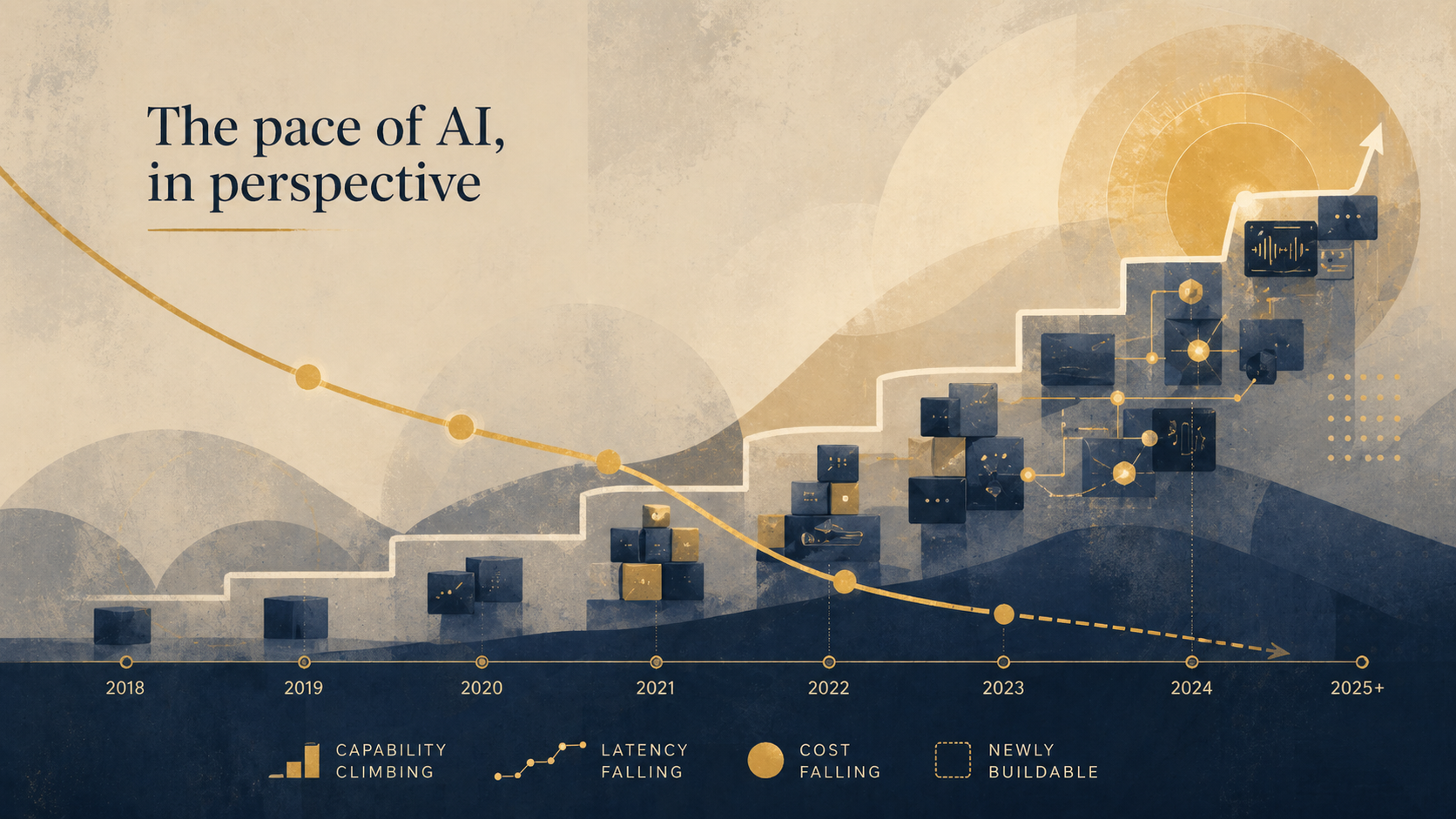
    The pace of AI, in perspective

    The pace of AI, in perspective

    March 20, 2026

    We overestimate what AI can do in a month and wildly underestimate what it can do in a year. A look at the actual slope — training cost per capability, inference cost, benchmark jumps — and what that means if you are building on top of it.

    The hidden cost of building

    The hidden cost of building

    April 10, 2026

    Nobody writes down the real P&L of a software studio. API bills that creep, Apple review cycles, the gravity of three codebases, verification interviews, infrastructure that layers silently. The sticker price of "it just works" is paid in places you do not expect.

    How to build in the digital

    How to build in the digital

    January 15, 2025

    The introduction of digital intelligence has paved the way for learning and rapid implementation of ideas, transforming how we approach creative problem-solving and innovation in the modern world.

    The art of creation

    The art of creation

    December 8, 2024

    Exploring the relationship between creative freedom and the mental constraints such freedom introduces, revealing how boundaries can paradoxically enhance artistic expression.